

Drift and Flow
On going nowhere and being somewhere

It troubles me that I pick up my phone and open Instagram the way I used to bite my nails, mindlessly, automatically, and without consciously deciding to. One moment I am here, present, alive in the morning, and then I am nowhere in particular, drifting on a current I didn’t choose, carried along by whatever the algorithm decides to show me next.
It is beautiful people making beautiful food, whole vegetables thrown at a pan becoming magically chopped, meals sliced and diced for our clipped mental digestion. It is people advertising shapewear and wrinkle creams. So much worry about who we are. The shapes of our bodies that have carried children and groceries and us through every stage of life. The lines on our faces, evidence of smiles and laughter, or god forbid, sadness and concern. I found myself thinking: I just want to be real. Then I laughed, remembering the app ironically named BeReal, which jolts its subscribers (myself included) out of the actual present moment to take a photo of their “real” moment to post, then keeps them there, scrolling to see who else is Being Real. Do they see my photo? Do they like it? Am I okay? Am I enough? Am I real?
Can you bake a loaf of sourdough without wanting others to know about it, like it, share it, acknowledge it? Can you take a walk, finish a project, or have a moment of joy and let it belong only to you and the people you are sharing it with in actual real life?
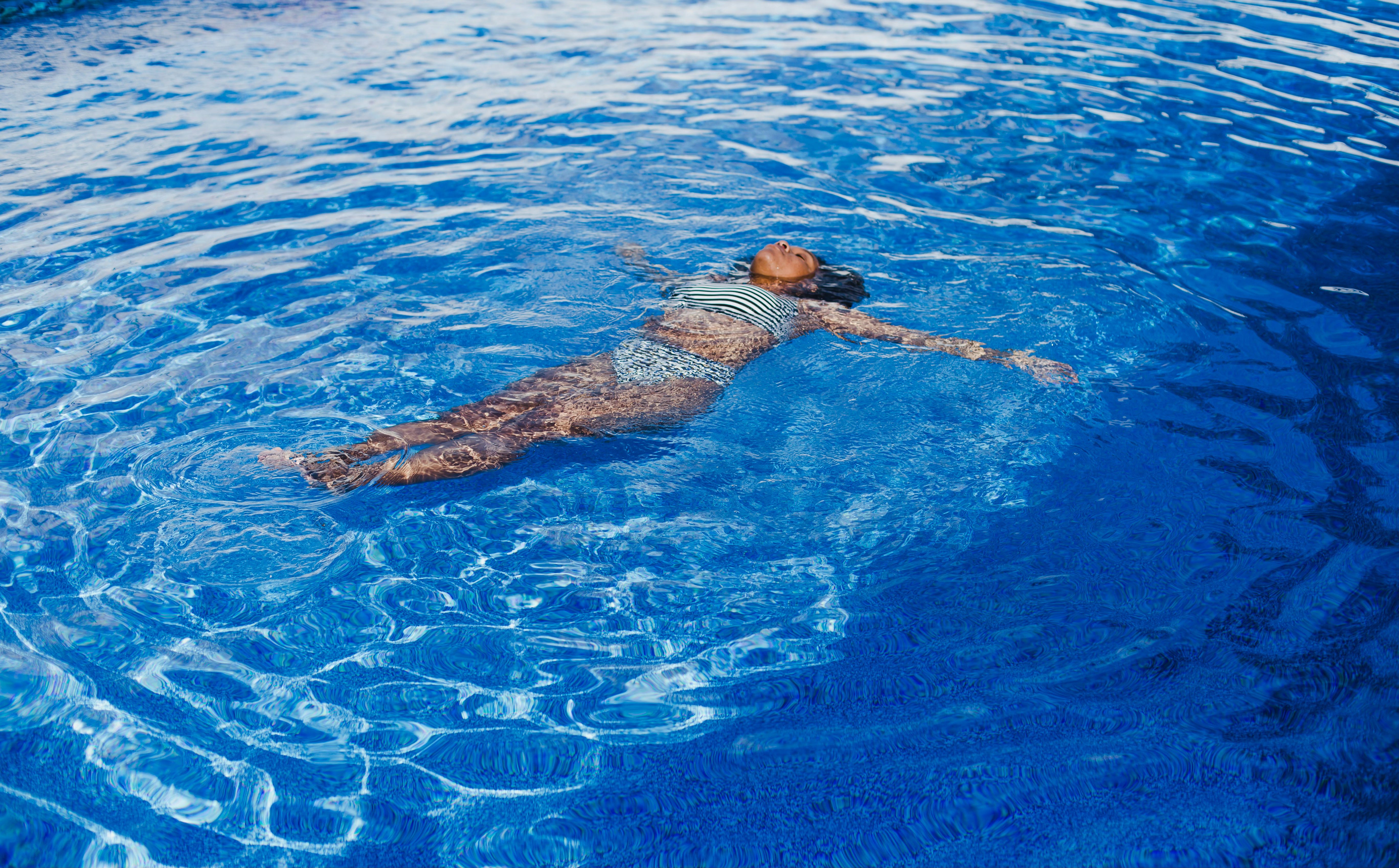
That state of mindless scrolling has a feeling. It is shallow, a little hollow, time disappearing without the satisfaction of having actually gone anywhere or done anything. It is called drift. When you are on water, drifting is different than floating. Floating is being present in the moment, trusting in the support of the water and your ability to relax into it. Drifting is a lack of awareness about where you are being taken. When I drift on my phone, I feel numb and not connected to reality or others in a meaningful way, even though our phones and social media are supposed to help us feel more connected. It is just the current taking me, and me letting it.
Psychologist Mihaly Csikszentmihalyi spent his life studying the opposite of this state. He called it flow: those moments when we are so fully absorbed in something challenging and meaningful that time seems to vanish or slow down completely. He wrote that the best moments in our lives are not the passive, receptive times but when our body or mind is stretched in a voluntary effort toward something difficult and worthwhile. Flow lives at the intersection of challenge and skill. If it is too easy, we tend to drift. If it is too hard, we may drown or remove ourselves from the water entirely. And distraction, he found, is flow’s greatest enemy. The algorithm knows this. It is specifically designed to keep us just engaged enough to stay but never challenged enough to arrive anywhere meaningful.
It is a tricky thing to be biologically wired for connection and then be handed something that mimics it so convincingly. Our phones promise community and deliver comparison. They offer presence and produce drift. Our phones are tools, but they also act like drugs. There is a difference between connection and compulsive consumption. Between floating with awareness and drifting without it. The question is not whether we are wired for connection. The question is whether we are awake and aware enough to know the difference between the real thing and something that feels like it but is actually engineered to hijack the same reward centers in our brains that light up for love and belonging.
In March, craving real-life, hands-on work and connection, I became a volunteer at the Wildlife Care Center at the Bird Alliance of Oregon. My days there are filled with birdsong and the quiet bustle of humble, generous humans moving carefully, keeping the space calm and safe for the birds in their care. When I am there, I don’t think about my phone. I just show up and do the work and when I get home, I am excited to tell my husband and daughter about my day.
Feeding a baby bird with a syringe of slurry is hilarious. I wave the syringe over their heads and their little beaks pop open like tiny toys. I have to get the syringe deep down the right side of their mouth or it will go down their windpipe, so I have to be completely focused and present. Nothing else exists in that moment. Not the scroll, not the comparison, not the dings and the drift. Just tiny open beaks.
Sometimes one of the injured birds doesn’t make it. Last week, it was a fledgling hummingbird, incandescent green, caught by a cat the day before as it was learning to fly. The vividness of its feathers made it almost impossible to believe its life force was gone. I said a small prayer of thanks for its short life and wrapped it in newspaper.
This is flow. I am grateful that I have found it working with birds. I also find it playing tennis, cooking a meal that I am making up as I go, and writing in my journal. You might find it tending a garden, teaching a child to read, playing an instrument, or losing yourself in the making of something with your hands. The point is not the audience. The point is the aliveness. The feeling of being fully stretched toward something that matters, present in your body, unaware of the time, unbothered by who is watching.
Drift is not the enemy. We all need rest; we all lose the thread sometimes. But it is worth pausing and asking when you put down your phone, how do you feel? Nourished or hollow? Rested or vaguely unsettled? That feeling is information. That feeling is your river telling you if you are floating, drifting, or flowing.
Some questions to consider:
Do you remember learning to float? Do you remember leaning back into the surface of the water, working to let go and finally allowing yourself to be supported by your faith and presence, feeling your muscles release into the rippling of the water’s surface? Can you describe this feeling and what it says to you about presence?
Do you feel like your phone and social media are tools or have they become more of a distraction? Do you feel the pull of the addiction into that empty sense of connection by tapping into the never-ending current of images and noise and other people's curated lives, and calling it company? Have you felt this sense of drift?
Think about a moment when you lost track of time completely from being so fully alive in what you were doing that the world fell away. Can you return to that moment in your body? Feel the quality of your attention, the absence of self-consciousness, the feeling of being exactly where you were supposed to be. Write about what you were doing and what it felt like to be so fully there. Does that moment tell you something about who you are and what you are here to do?
I write about mindfulness and flow among many other topics in my book, Radical Wellness: Pathways to a Healthy Body, Mind, and Planet.